The Atlantic Hurricane Season "Calm" Trap: Why Quiet Headlines Can Leave You Less Prepared
A below-normal Atlantic hurricane season does not mean zero danger. Here is why preparedness experts warn against the paradox of calm, and why a windproof USB-rechargeable lighter belongs in a serious storm kit.
The Atlantic Hurricane Season “Calm” Trap: Why Quiet Headlines Can Leave You Less Prepared
When the news cycle starts using phrases like “quiet season,” “below normal,” or “historic calm,” many households unconsciously relax. That reaction is understandable, but it is also exactly where preparedness can break down.
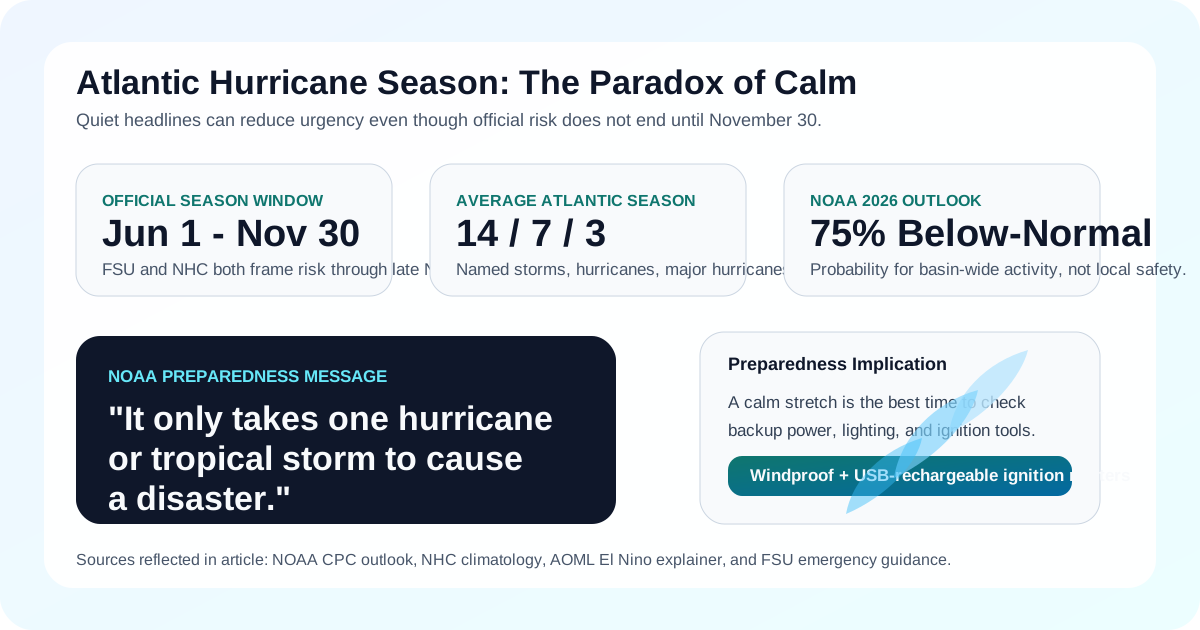
NOAA repeatedly warns that a below-normal season is not a landfall forecast and that years with lower basin-wide activity can still produce severe local damage. In NOAA’s own wording, “It only takes one hurricane (or tropical storm) to cause a disaster.” The official Atlantic hurricane season also runs all the way through November 30, which means a calm stretch in mid-season is never the same thing as the all-clear.
For homeowners, renters, and anyone building an emergency kit, that gap between perception and actual risk is the real story. We can call it the Paradox of Calm: the quieter the headlines sound, the easier it is to delay basic prep until it is too late.
What the Data Actually Says
The current Atlantic conversation is shaped by two truths that can exist at the same time:
- Seasonal outlooks can point to below-normal overall activity.
- Individual storms can still create life-disrupting or life-threatening impacts.
Here are the baseline facts worth anchoring to instead of headline mood:
| Metric | What the official sources say | Why it matters |
|---|---|---|
| Official season window | June 1 to November 30 | Risk remains on the board much longer than many casual readers assume. |
| Average Atlantic season | 14 named storms, 7 hurricanes, 3 major hurricanes | ”Normal” is still a very active storm environment. |
| 2026 NOAA outlook | 75% chance of a below-normal season | ”Below normal” is a probability range, not a promise that your area is safe. |
| NOAA preparedness message | One storm is enough to cause a disaster | Household prep decisions should not depend only on seasonal hype. |
Sources: NOAA CPC Atlantic Hurricane Outlook, NHC Tropical Cyclone Climatology, FSU Tropical Storms and Hurricanes Basics.
Why “Calm” Coverage Can Backfire
Preparedness experts do not worry only about the storm itself. They also worry about the human behavior that happens before it.
When people hear “calm,” they often postpone the small tasks that matter:
- topping off batteries and power banks
- replacing old flashlights
- checking drinking water and shelf-stable food
- testing radios and phone charging backups
- restocking candles, matches, and ignition tools
That is the paradox. Quiet coverage lowers urgency precisely when households should be using the breathing room to prepare intelligently.
Florida State University’s emergency guidance keeps the framing simple: the season lasts through November 30, and the main hazards are not just wind, but also storm surge, inland flooding, tornadoes, and rip currents. In other words, even one late-season storm can turn a “quiet” year into a disruptive week for a specific community.
The Overlooked Emergency-Kit Item: Reliable Ignition
Most preparedness checklists focus on water, flashlights, medications, and backup power. All of that is correct. But one small item is often underappreciated until the power is out: a dependable way to create ignition.
That matters in a storm scenario for several reasons:
- candles and emergency lanterns may need lighting
- gas stoves or grills may require manual ignition
- wet, windy conditions make ordinary open-flame tools harder to use
- stores may be closed or sold out when replacement fuel is needed
This is where the product angle becomes genuinely practical rather than cosmetic. In high wind or post-storm cleanup conditions, a traditional butane flame can blow out repeatedly. And after prolonged outages, a gas lighter becomes less useful once fuel runs low. A windproof, flameless, USB-rechargeable arc lighter solves a different set of problems: it does not rely on refill canisters, and it can be topped up from a power bank, car USB port, portable power station, or solar panel with USB output.
Why Pure-Electric Windproof Lighters Fit Storm Prep Better
Not every electric lighter is ideal for emergencies, but the category has clear advantages in this use case.
| Emergency Scenario | Traditional Gas Lighter | Pure-Electric Arc Lighter |
|---|---|---|
| Strong wind outdoors | Flame can blow out | Plasma arc is wind resistant |
| Extended outage | Needs remaining fuel or refill access | Can recharge from stored USB power |
| Post-storm resupply | Butane refill may be unavailable | Works with common backup charging gear |
| Damp storage conditions | Matches and cheap flints can fail | Sealed rechargeable unit is often more consistent |
| Everyday readiness | Easy to forget fuel level | Battery indicators make top-up habits easier |
The strongest preparedness use case is not “electric beats everything in every condition.” It is more specific than that:
If your emergency plan already includes a power bank or small solar charger, a gas-free windproof lighter becomes a very logical companion tool.
That is especially true for households that already prefer rechargeable gear over one-time consumables.
What to Look For in a Hurricane-Season Lighter
If you are buying specifically for emergency readiness, the shortlist is different from buying for aesthetics alone.
Prioritize:
- windproof arc ignition
- USB charging that works with common power banks
- battery indicator lights
- long-reach neck for candles, stoves, and safer hand distance
- safety lock or power switch for drawer and kit storage
In our own editorial coverage, the REIDEA R1 Electric Lighter and the broader REIDEA lighter collection stand out because they match that checklist well: flameless ignition, windproof usability, and easy USB charging from the same backup power gear many people already keep for phones and radios.
For readers who want a broader category comparison before choosing a model, see our roundup of the best electric lighters in 2026 and our guide to the best fireplace and long-reach lighters in 2026.
If you want the harder gear-selection angle rather than the preparedness psychology angle, our sister site Arc-Volt also breaks down why extreme-weather emergency kits should use pure-electric windproof lighters instead of traditional gas lighters.
A Better Response to “Quiet Season” Headlines
The right takeaway from a calm Atlantic stretch is not complacency. It is opportunity.
If the basin is temporarily quiet, that is the moment to:
- charge every power bank you own
- test your flashlight and radio batteries
- check your lighter, matches, and candle supply
- replace any emergency tool that depends on consumable fuel
- make sure your backup ignition method still works today, not in theory
Preparedness is easier, cheaper, and calmer when done before a storm enters the cone.
Final Take
The most misleading phrase in hurricane coverage is often not “major storm.” It is “quiet season.”
An Atlantic season can be quieter than average and still produce a destructive event. It can feel uneventful until the week it is not. That is why the smartest preparedness mindset is simple: use the calm to close gaps.
And one of the easiest gaps to close is also one of the smallest items in the house. A windproof, USB-rechargeable electric lighter will not replace water, food, medical supplies, or evacuation planning. But in a real outage, it can absolutely be the overlooked tool that proves more useful than a half-empty gas lighter when conditions turn ugly.